

A founder’s note · on starting, and on staying.
Originally published at RootAstro.org
It started as a discontent I couldn’t put down.
I am, by temperament, a gardener. I notice what is dying and what wants to grow. For a long time the thing I kept noticing was myself, and the people around me, being slowly pulled away from center by phones, by feeds, by the relentless digitizing of every ordinary hour. We had become very connected and very lost at the same time.
The hunch was simple, and it would not leave me alone: people are willing to give real time and real money to be part of something bigger than a feed. Not to be numbed. To be reminded of what they are. The skills our grandparents took for granted, how to build a fire, how to find north, how to sit still, had become exotic. That gap felt like fertile ground.
A seed is not a plan. It is a pressure. The only honest thing to do with it is to put it in the ground and find out.
So I wrote it down. That is the whole trick.
An idea in your head can be anything, which is another way of saying it is nothing. The moment you write it down it has to choose. It commits to words, and the words push back, and in that argument the idea finally takes a shape you can hold up to the light.
My first draft had a working name. I called it Namuh, “human,” spelled backwards, because the whole point was a return. Back to the thing we were before the screens. Here is the first sentence I ever wrote about it, exactly as it sat in the notebook:
Exhibit · Notebook entryDraft 01 · “Namuh”
“A community of people, purposefully practising to be more human again.”
First line, Namuh manifesto
It was rough. It used words I would later throw out. But it existed outside my head for the first time, and that changed everything. You cannot edit a thought. You can edit a sentence. Writing is how thinking becomes work.
You don’t write to record an idea. You write to find out what it is.
On the gardener’s method
Then the words asked to become a shape.
Once a thing is written, it wants to be drawn. The first marks were a mess: a blue-pen brain-dump on a whiteboard, arrows running everywhere. Then a quieter pencil sketch the next morning, with a tree at the center and the rooms arranged around it. These are the real first pages. I’m keeping them here on purpose. This is what the beginning actually looks like. Not a finished brand, but an honest first guess.
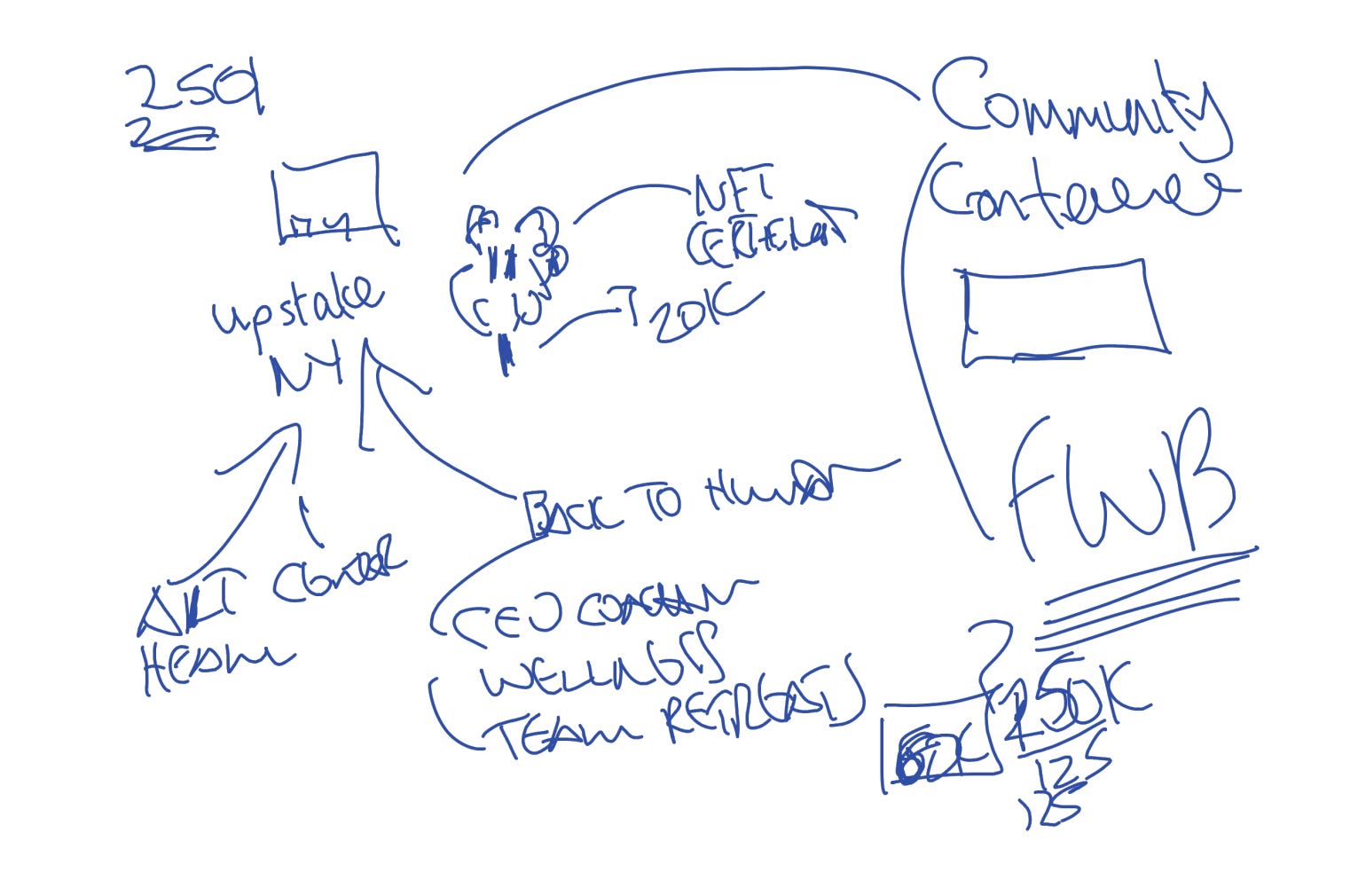
Exhibit A · The first scribble. Everything at once. “Back to Human,” upstate New York, community, CEO coaching, team retreats. Arrows running in every direction. The seed, before it had an order.
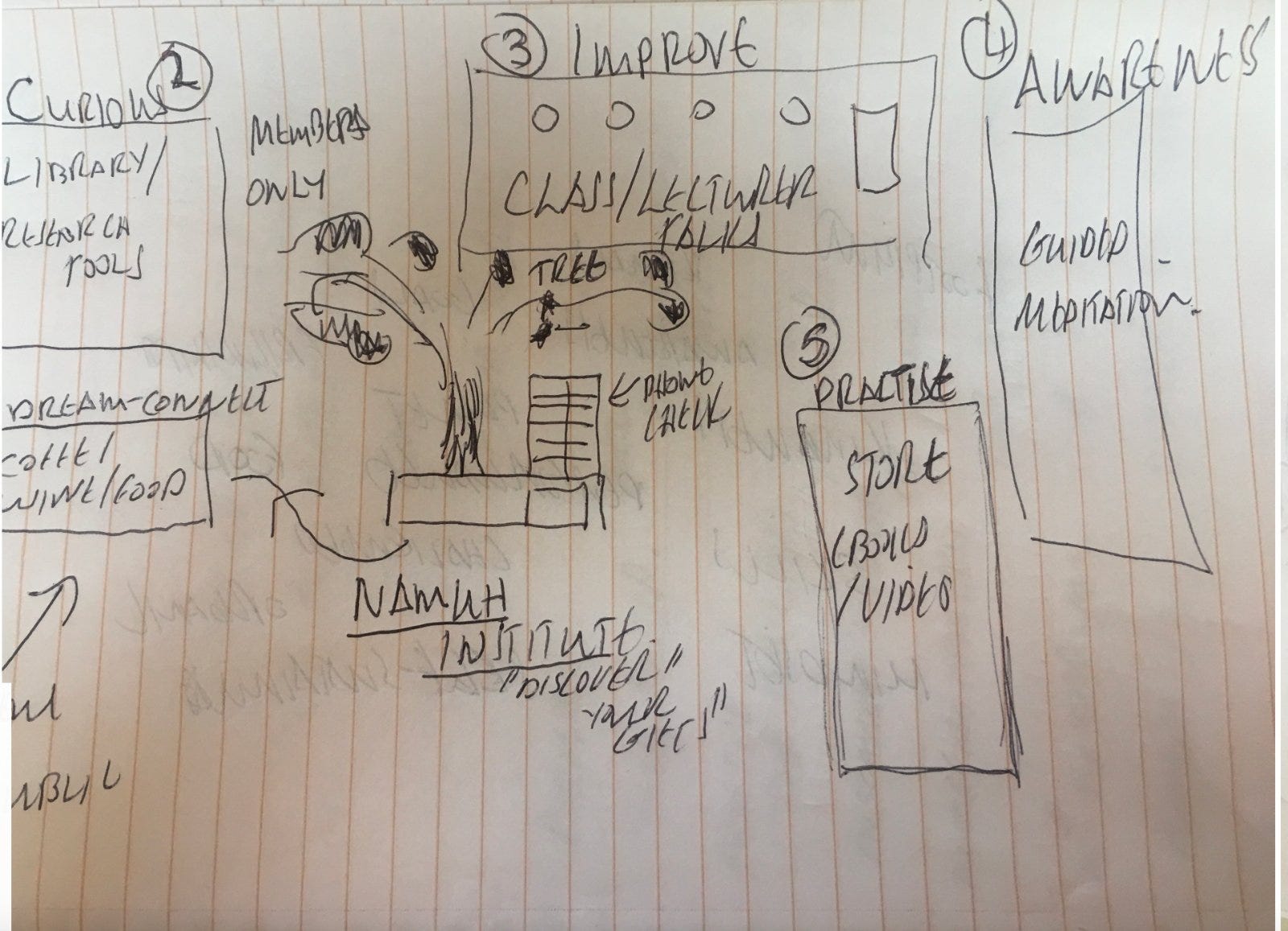
Exhibit B · The first layout. The next morning, in pencil. A tree at the center, rooms arranged around it: Curious, Improve, Awareness, Practice. It had a name then: the Namuh Institute. The Lodestone was already there.
A page of rambling, sorted patiently, becomes a spine.
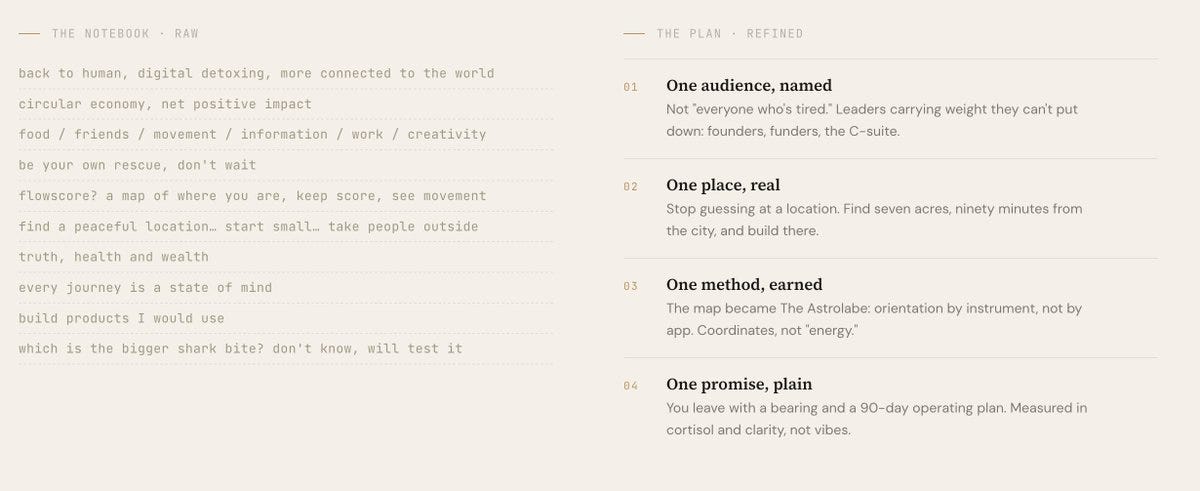
Ideas refined, start to shape.
Then you give it to a real person and shut up.
A plan on paper is still a guess in good handwriting. So I started handing pieces of it to real people and listening, properly listening, the kind where you don’t defend anything. The first to sit with the early “Flowscore” self-diagnostic was a friend named Louise. What stuck with her wasn’t a feature. It was a question.

Customer Interviews
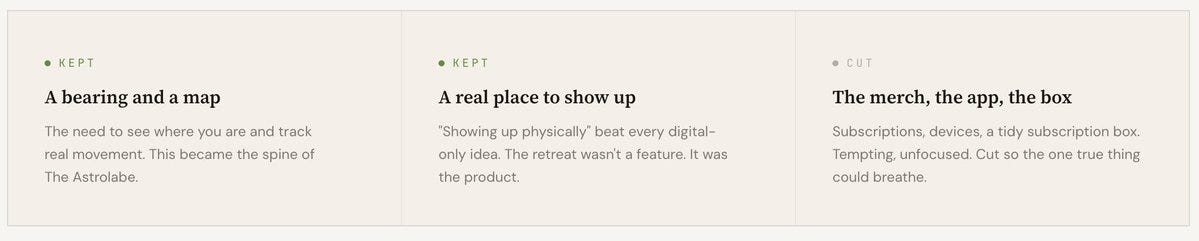
That one line reorganized everything. People didn’t want another dashboard. They wanted to know where they stood, where they were headed, and proof they were moving. So I kept what tested true and cut what didn’t, without mercy.
The second habit nobody photographs: you stay.
Starting gets all the credit. But a seed in the ground is not a garden. It is a promise that demands you come back. Most ideas don’t die at the start. They die in the long, unglamorous middle, where there is nothing to show and no one is watching.
So I tended it through seasons. Names changed. The thesis sharpened. The woo got cut. What was once a sprawling community called Namuh narrowed, year over year, into one true thing built with rigor, because I kept showing up to the page, and then to the land.
SEASON 01
A discontent, named Namuh.
SEASON 02
Tested with real people. Cut to the core.
SEASON 03
A method takes form: The Astrolabe.
NOW
Seven acres. Under construction. The doorway to 2,000 acres of nature’s best.
And one day the sketch came back at scale.
This is the moment a dream stops being yours alone. Your handwriting goes to a surveyor and comes back drawn to the foot, on real contour lines, with setbacks and a septic field and a title block. The tree from the notebook is now a gathering yurt. The vague “places to practice” are a hundred-and-eighty-foot archery range. The idea is now something other people can build.
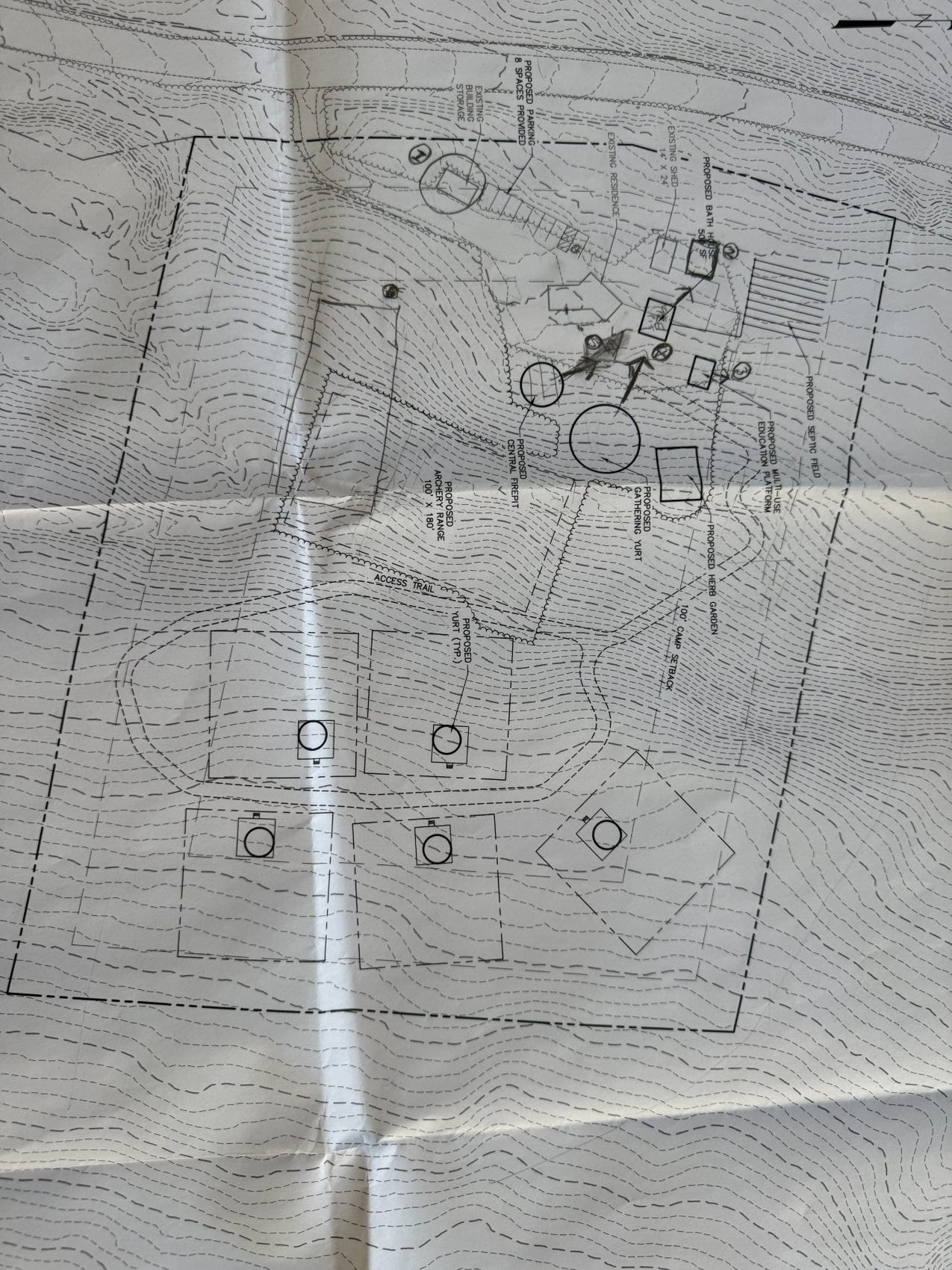
Exhibit C · Marked up at scale. The same idea, on contour lines and drawn to the foot. Proposed yurts, a central firepit, the gathering yurt, a 100′×180′ archery range. Hand-circled where it mattered most.
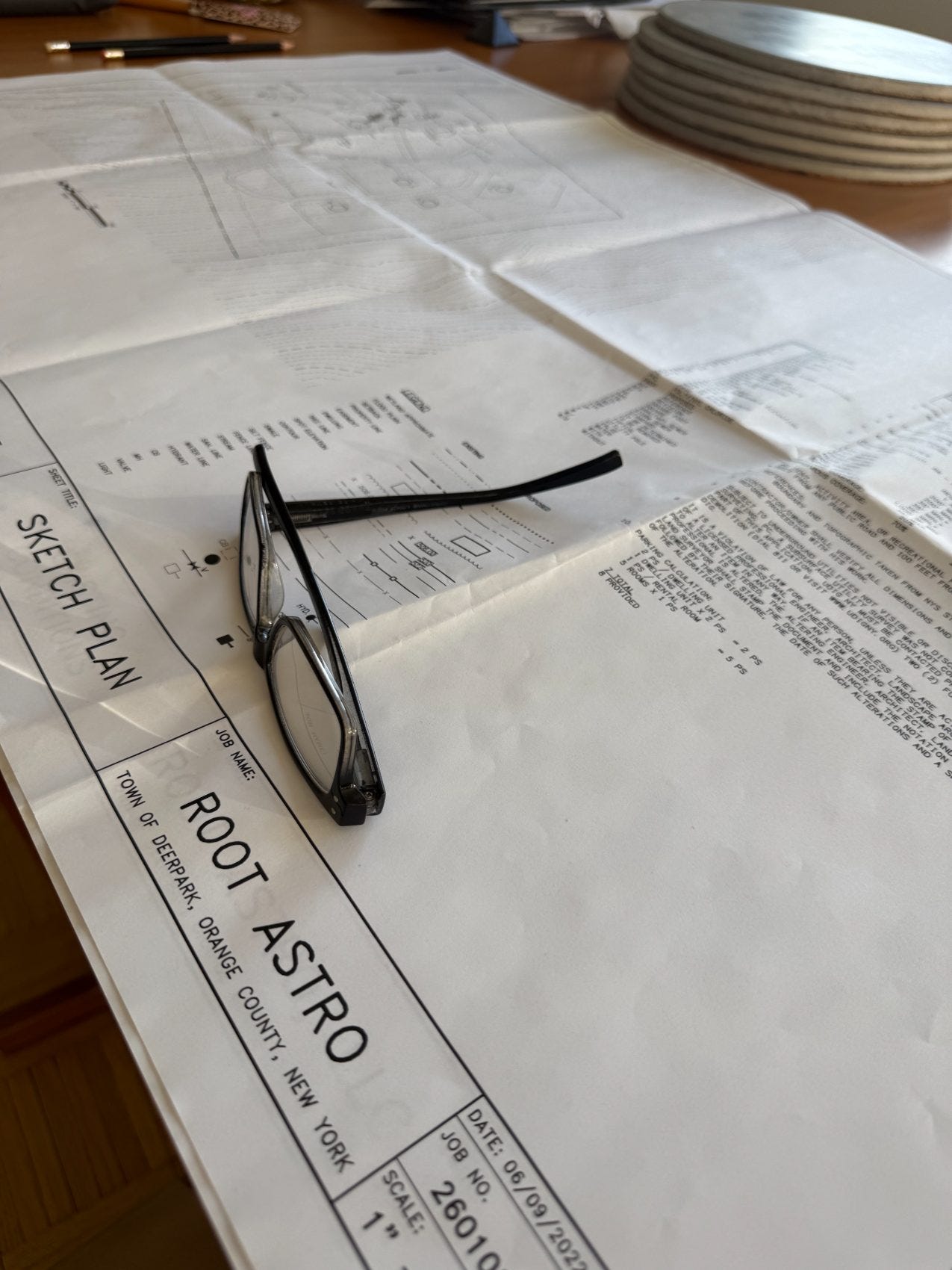
Exhibit D · The title block Orange County, New York. The title block no longer says Namuh. It says Root Astro. A sentence had become a place with an address
Same root. Truer name.
The name had to grow up with the idea. Root for what holds you down: the body, the ground, the unglamorous practice. Astro for what you steer by: the fixed star, the bearing you can’t fake. Roots below, the instrument above. The Lodestone.
Everything soft got cut. What remained was a strapline I could stand behind without flinching. The same idea that started it, finally said plainly.
Back to Human.